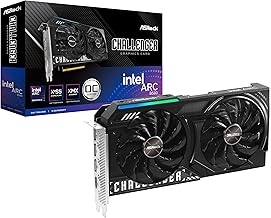
The graphics card market is buzzing with competition, and Intel's Arc series has firmly planted its flag with the compelling B580 lineup. Offering a sweet spot of performance and value, these 12GB GDDR6 GPUs are designed to tackle modern gaming at 1440p and even dabble in 4K. But with several board partners offering their own takes, choosing the right one can be a challenge. This guide dives deep into the key contenders, comparing their features, cooling technologies, and overall value proposition to help you make an informed decision for your next PC build.
The Core Contenders: ASRock, Sparkle, and WEELIAO
At the heart of every B580 card is Intel's powerful GPU architecture, but the implementation varies. ASRock offers two distinct models: the Challenger OC and the Steel Legend OC. The Challenger features a robust dual-fan cooling system with a 2740 MHz GPU clock and the prized 0dB Silent Operation, where fans stop entirely under light loads. For users seeking maximum cooling potential, the Steel Legend steps up with a triple-fan array, a slightly higher 2800 MHz clock, and Polychrome SYNC RGB lighting for system integration.
Sparkle enters the ring with the formidable Titan OC. This card boasts the innovative Torn Cooling 2.0 system with an axial fan design, a breathing light effect, and a sturdy metal backplate. It represents a premium cooling approach within the B580 segment. Not to be overlooked, WEELIAO's GUNNIR Index model provides a compelling value option with a 2670 MHz clock, dual-fan cooling, and support for 4K outputs, making it a solid budget-conscious choice for a 12GB GDDR6 GPU.
Performance and Cooling: The Critical Factors
When evaluating any gaming graphics card, thermal performance is paramount. The difference between a dual-fan and triple-fan design can impact sustained boost clocks and acoustic levels. For a deep dive on optimizing GPU cooling, our dedicated B580 GPU Cooling Guide explores how adding high-quality case fans like the DARKROCK 3-Pack can significantly improve overall system airflow and lower GPU temperatures.
Another often-overlooked aspect of cooling is thermal interface material. Applying a high-performance paste like ARCTIC MX-4 can shave off several degrees, especially on cards that have been in use for a while. This is a key tip for any DIY PC building enthusiast looking to extract every bit of performance from their B580 investment. For a step-by-step application tutorial, check out our B580 GPU Thermal Paste Guide.
Considering the Alternatives: B570 and Beyond
The B580 sits in a strategic position, but it's wise to consider alternatives. The budget graphics card segment offers compelling options like the ASRock Intel Arc B570 Challenger with 10GB of VRAM. This card is a fantastic alternative for high-framerate 1440p gaming, as detailed in our ASRock B570 Challenger review. Similarly, Sparkle's B570 Guardian OC offers its own take with Torn Cooling 2.0, which we explored as a potential B580 alternative in a separate review.
For those whose needs align more with 1080p gaming or who are on a tighter budget, the 8GB VRAM class presents options like the Sparkle Intel Arc A580 ORC OC or the ASUS Dual Radeon RX 7600 EVO OC. The latter features Axial-tech Fans and is controllable via GPU Tweak III software. To understand how these stack up, our Sparkle A580 ORC review provides a detailed comparison.
Making Your Choice: Which B580 is Right for You?
Choosing the best B580 boils down to your priorities. If silent operation is critical, the 0dB Silent feature of the ASRock Challenger is a major win. For users building a showpiece PC with synchronized lighting, the ASRock Steel Legend's Polychrome SYNC is attractive. If you prioritize a sophisticated cooling solution above all, the Sparkle Titan OC's Torn Cooling 2.0 is a standout. And for the pure value seeker, the WEELIAO GUNNIR Index offers core B580 performance at a potentially lower price point.
All these cards share the future-proof connectivity of DisplayPort 2.1 and HDMI 2.1a, ensuring compatibility with the latest high-refresh-rate monitors. For a broader overview of the architecture and its applications, our complete guide to the B580 is an excellent starting point. Ultimately, whether you're targeting smooth 1440p gaming or exploring 4K gaming, the Intel Arc B580 family presents a versatile and powerful set of options that challenge the status quo in the mid-range GPU market.